
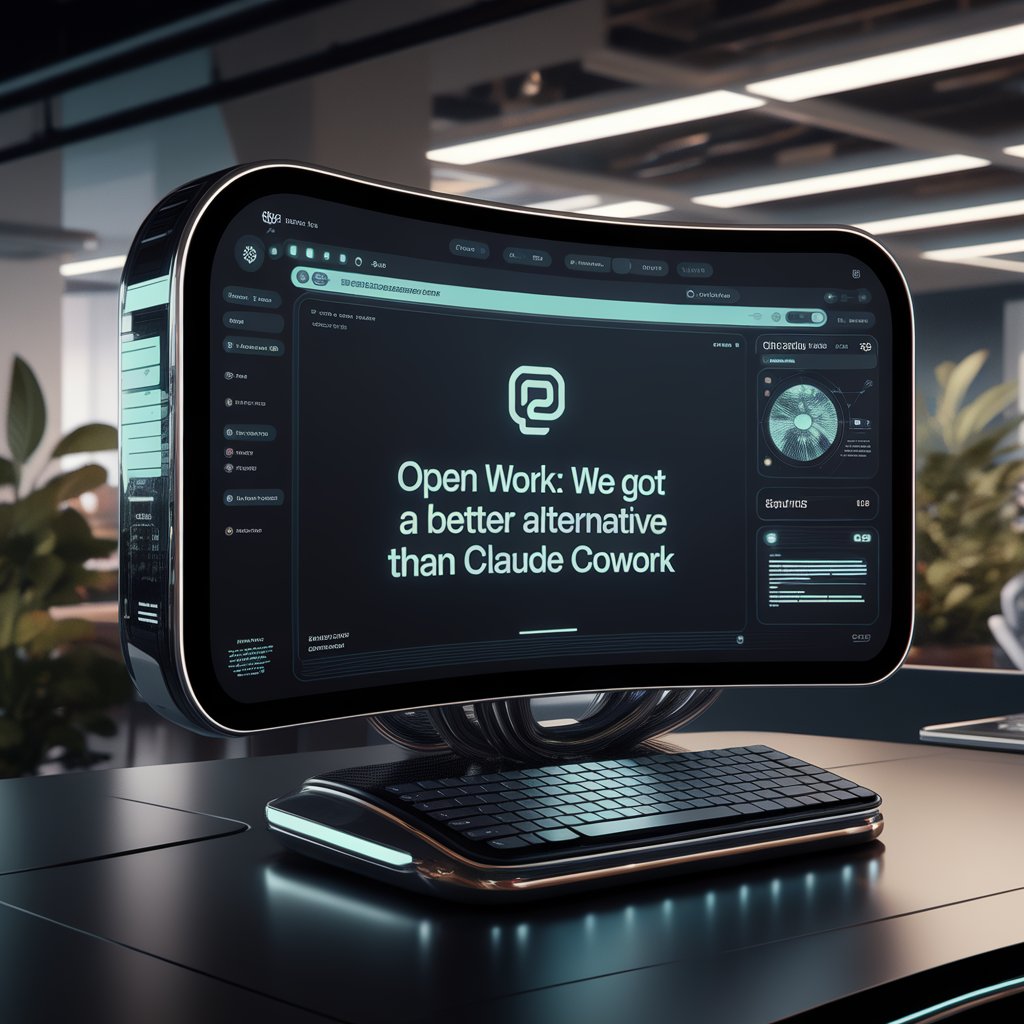

The “Computer Use” revolution is here, but it’s already bifurcating. On one side, you have Claude Cowork-slick, powerful, and terrifyingly centralized. On the other, the open-source resistance is mobilizing, and its new champion is Open Work.
Built by the team at different-ai (the minds behind OpenCode), Open Work isn’t just a script or a CLI tool. It’s a full-blown, Mac-native application designed to look Claude in the eye and say, “I can do that, but on my hardware.”
We took the v0.1 release for a spin. Here is why this might be the “Linux moment” for AI agents.
The Architecture: Power to the Primitives
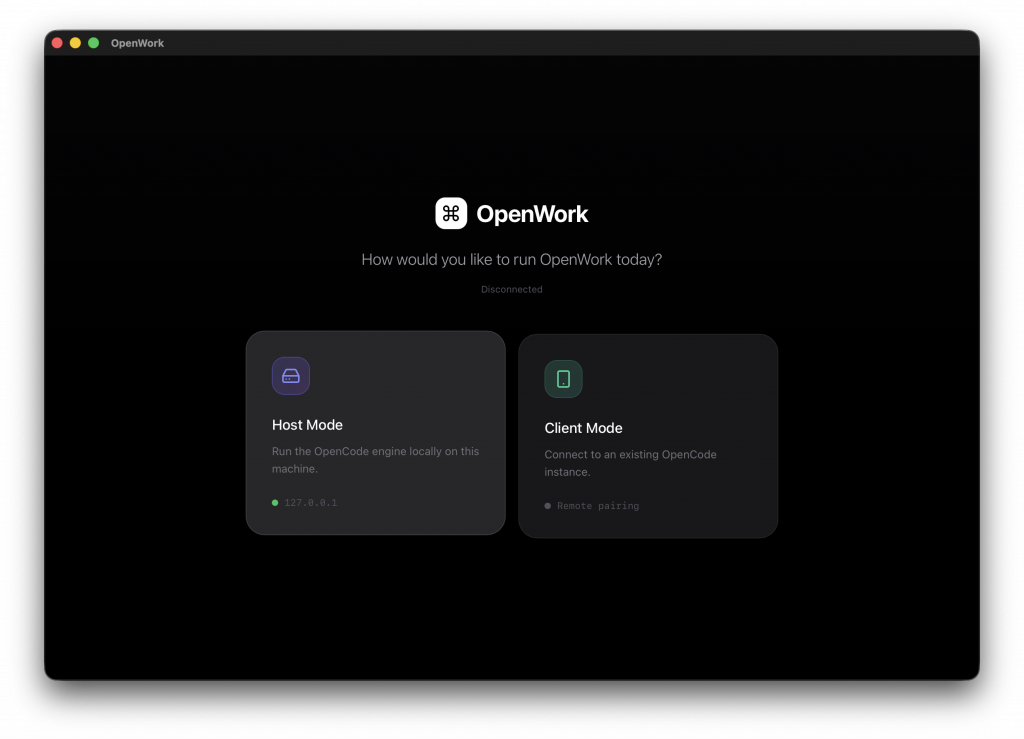
Unlike the myriad of “chatbots” wrapper apps, Open Work is built on OpenCode primitives.
Think of OpenCode as the operating system for agents-a set of standardized building blocks for file manipulation, browser control, and terminal execution. Open Work is the GUI shell that sits on top.
This separation is crucial. It means:
1. Modularity: You can swap out the “brain” (LLM) without breaking the “hands” (tools).
2. Safety: The primitives enforce permissions. The agent can’t just rm -rf / unless you explicitly hand it the keys to the nuclear football.
3. Extensibility: Because it uses the OpenCode plugin ecosystem, if you need the agent to talk to Slack or Linear, you just install the module. You don’t wait for Anthropic to prioritize it.
The “Purpose-First” UI
The Genius of Claude Cowork is that it hides the complexity. Open source tools usually proudly display their complexity (looking at you, AutoGPT).
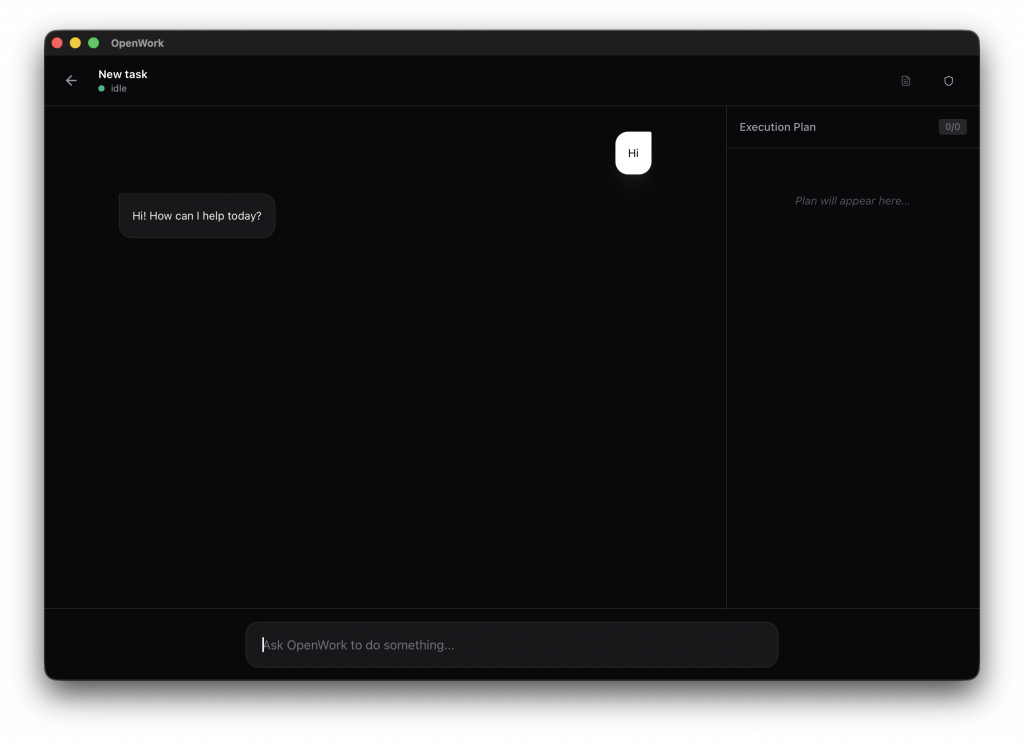
Open Work breaks this trend. The “Purpose-First” UI is shockingly clean. It doesn’t look like a terminal window hacked into a webview. It looks like a native Mac app.
- Live Status Cards: You see exactly what the agent is “thinking” and “doing” in real-time cards, not a scrolling wall of JSON logs.
- Artifacts Parity: It matches Claude’s “Artifacts” UI, rendering HTML/React code instantly in a side-panel.
- Mobile Native: Surprisingly, the UI is responsive enough to feel native even when mirrored or accessed remotely.
The “Computer Use” Face-Off
How does it actually feel to use?
Claude Cowork feels like hiring a very expensive consultant. You hand off the task, they disappear into a black box, and come back with a result. It’s polished, but you’re renting intelligence.
Open Work feels like hiring a junior engineer who sits next to you. You see them open the browser. You see them struggle with the file permissions. You see them fix the error.
The “White Box” Advantage
When Claude fails, you get a polite error message. When Open Work fails, you see the stack trace. For a developer, the latter is infinitely more valuable. You can debug the agent.
We ran a complex task: “Scrape the top 10 AI papers from arXiv, summarize them, and generate a static HTML site with the summaries.”
Claude:Refused 3 times due to “browser policy,” eventually did it but hallucinated one link.
Open Work: Fired up a local browser instance (visible!), downloaded the PDFs, ran OCR locally (using Mac’s Vision framework), and built the site. It took longer, but it actually did the work*.
The Community Verdict
We scoured Reddit and developer forums to see what the early adopters are saying.
On Claude Cowork:
- The Good: Users call it a “game changer” for tedious admin work like organizing messy folders or generating expense reports.
- The Bad: The $100-200/month price tag (for Claude Max) is a massive barrier. Users also complain about the “single folder” limitation and the fact that it’s Mac-only for now.
- The Ugly: Privacy concerns. “It feels like hiring a consultant who takes all your documents home with them,” one user noted.
On Open Work:
- The Good: Developers love that it feels like a “product,” not just a Python script. The ability to wrap CLI tools like
curlandjqinto agent capabilities is a hit. - The differentiator: It’s free (if you run local models) and respects the “Open by Design” ethos. No black boxes.
The Verdict: If you need a polished assistant today and don’t care about the cost, Claude wins. If you want to own* your agent and save $2,000/year, Open Work is the clear winner.
The Bottom Line
Open Work is still raw. It’s early days. But it poses a fundamental question: Do you want your agent to be a service you subscribe to, or software you own?
For the enterprise, Claude Cowork is the safe bet. But for the hackers, the builders, and the privacy absolutists, Open Work is the only way forward.