

OpenClaw is a beast. Really. It’s an incredible piece of open-source autonomous agent software, but if you’ve tried running it locally, you know the pain. It eats RAM like Chrome on a bender, often demanding over 1GB just to idle. And if you read our coverage on Anthropic banning OpenClaw, you know the ecosystem is fracturing.
So what’s the alternative? I’ve been tracking the underground movement of lightweight AI agents, and a pattern is emerging. Developers are stripping away the bloated Node.js backends and rewriting everything for extreme efficiency.
The real bottleneck isn’t just system RAM—it’s token memory efficiency. Let’s look at the best OpenClaw alternatives right now, including PicoClaw, TinyClaw, and some fascinating Chinese frameworks.
The Physics of Token Memory
Before we compare the agents, we need to map the constraints.
Think of your system RAM as the physical desk space in front of you, and LLM context tokens as your reading speed. OpenClaw tries to put the entire library on your desk at once. As its persistent memory grows, loading that entire history into every prompt consumes massive amounts of tokens. This leaves virtually no room in the context window for actual reasoning.
You can’t cheat the speed of light, and you can’t cheat token limits. If your agentic AI workflow is wasting 80% of its budget just remembering who it is, you’ve already lost.
PicoClaw: The 10MB Goliath
This brings us to PicoClaw. Developed by Sipeed and rewritten entirely in Go, this thing is absurdly efficient.
I’m talking less than 10MB of RAM at idle. That is a 99% reduction compared to OpenClaw. It boots in under a second and can run on a $10 RISC-V board or a Raspberry Pi Zero.
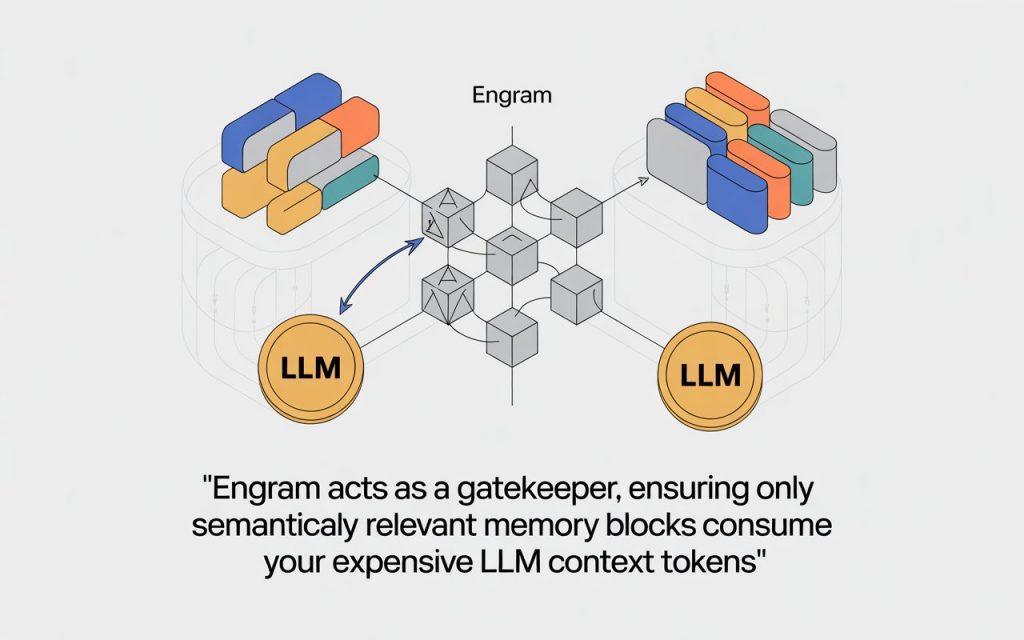
But what strikes me is how it handles the token problem. PicoClaw introduces a concept called “Engram.” Instead of dumping all persistent data into the prompt, Engram acts as a smart context builder. It uses SQLite-backed semantic search to pull only the relevant memories. It’s essentially treating local storage as an intelligent archive, keeping the “desk space” (RAM and tokens) completely clear.
TinyClaw: Context Compaction at Scale

If PicoClaw is about system efficiency, TinyClaw is about token preservation.
TinyClaw uses a “4-layer compaction” method. Unbounded context windows burn tokens. Period. TinyClaw counters this with a self-improving memory system based on temporal decay. Old, unused memories literally fade away, much like human memory.
It also tier-routes queries so you aren’t calling complex models for simple tasks. This is similar to the approach we saw with Open Work’s local-first architecture, but applied aggressively to context management. By pruning the context before it ever reaches the LLM, TinyClaw keeps API costs negligible.
The Chinese Alternatives: Nanobot
Looking East, Chinese researchers are approaching the same problem from a different angle.
Enter Nanobot, developed by the University of Hong Kong. It’s a Python-based ultra-lightweight framework that fits its entire codebase into about 4,000 lines. It provides persistent memory, web search, and background agents, but with a footprint small enough for edge devices.
The mainstream narrative focuses on massive foundational models, but look closer at the agent layer. These tight, auditable frameworks are where the real local deployment battles are being fought. Have you noticed how similar this is to Tencent’s SearchAgent 8B? The emphasis is on doing more with less hardware.
NanoClaw: Containerization and Security
While efficiency is critical, security remains one of the most glaring vulnerabilities of OpenClaw’s architecture. Its design relies on broad system access, meaning a hallucinated or compromised agent command could potentially interact with critical host files.
This is where NanoClaw proves its value. Instead of giving the agent free rein, it runs AI agents entirely inside isolated environments like Docker or Apple Containers. If an agent goes rogue or is subjected to prompt injection, the blast radius is strictly confined to that single container. Despite this locked-down approach, it still fully supports external messaging integrations and memory features, making it the most pragmatic choice if your primary concern is safely isolating your AI workflows.
| Feature | PicoClaw | TinyClaw | NanoClaw | OpenClaw |
|---|---|---|---|---|
| RAM Usage | ~10MB | < 100MB | Variable | 1GB+ |
| Token Optimization | Engram (SQLite) | Temporal Decay | Standard | Standard |
| Security | Standard | Standard | Containerized | Broad Access |
| Best For | Embedded Devices | API Cost Savings | Secure Local Testing | Fast Prototyping |
So what does this actually mean for developers?
The Bottom Line
OpenClaw proved that autonomous agents could work. The alternatives are proving they can be practical.
Whether it’s PicoClaw’s 10MB footprint, TinyClaw’s token compaction, or NanoClaw’s containerized security, the era of bloated agent frameworks is ending. We are moving toward tiny, specialized orchestrators that respect your RAM and your API budget. The future of local AI isn’t bigger. It’s denser.
FAQ
Is PicoClaw ready for production tasks?
Not yet. It is still in early development, and security warnings recommend waiting for the v1.0 release before trusting it with sensitive, system-level tasks.
How does token memory differ from RAM?
RAM is the physical memory your computer uses to run the agent software locally. Token memory, however, is the “context window” limit of the LLM itself—essentially how much text the AI can actively process in a single API call.
Why are Chinese AI alternatives relevant here?
Projects like Nanobot out of Hong Kong show a global shift toward lightweight, auditable agent frameworks designed for edge devices, proving that agentic innovation isn’t isolated to massive cloud server deployments.