
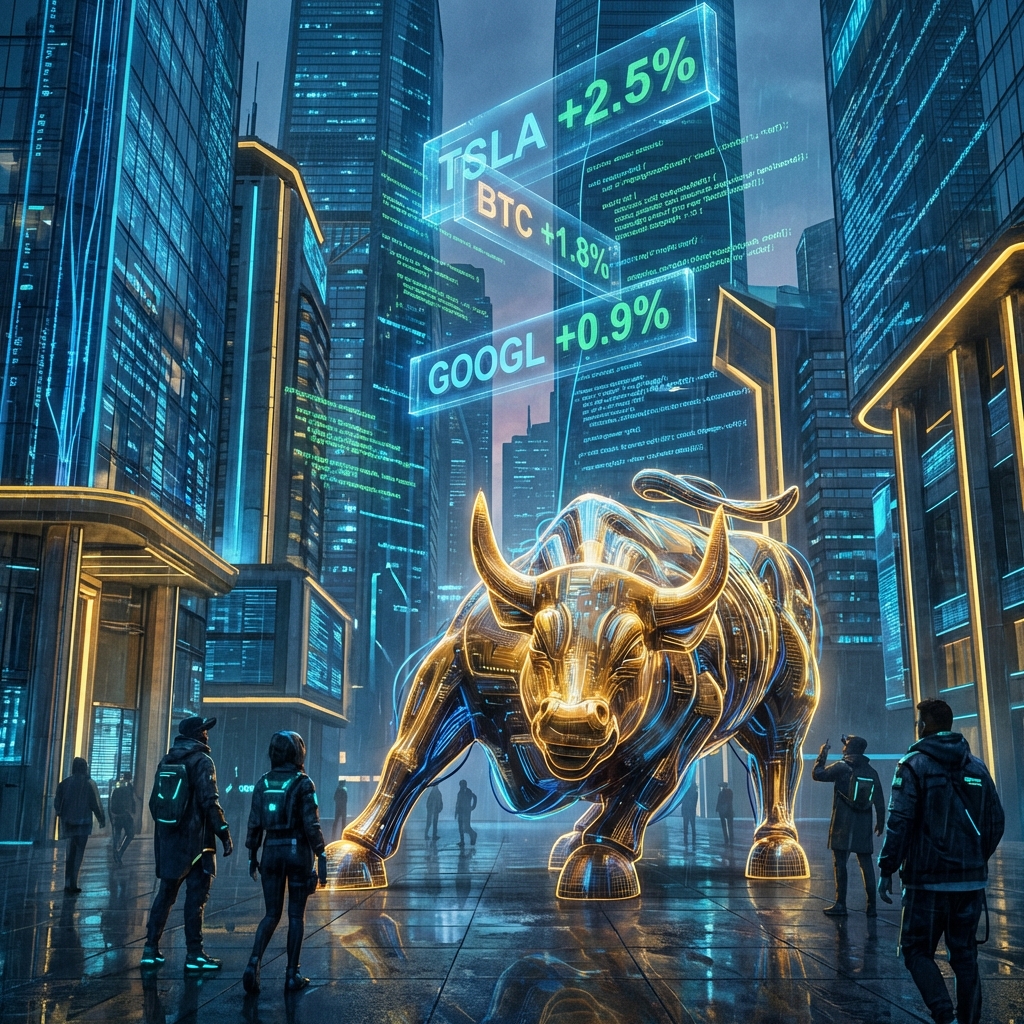

Wall Street is not known for its subtlety. When it finds an edge, it exploits it until the margin disappears. In 2026, the edge is Artificial Intelligence, and the scale of the investment is staggering.
Global AI spending has crossed the $2 Trillion threshold, with the Financial Services sector leading the charge ($97 billion in 2026 alone). This isn’t just about faster trading algorithms. It’s about a fundamental restructuring of the global financial architecture. Banks like JPMorgan Chase, Goldman Sachs, and Morgan Stanley are no longer just competing with each other; they are competing with Big Tech.
The era of “High-Frequency Trading” (HFT) is evolving into “High-Frequency Logic.” AI agents are now reading Fed minutes, analyzing satellite imagery of Walmart parking lots, and executing trades based on “Sentiment” rather than just price. This article explores the Goldman Sachs capex revisions, the rise of sovereign financial AI, and the “Aladdin Copilot” that manages the world’s wealth.
Scenario: The “Flash Crash” That Didn’t Happen
To understand the change, consider a market event on January 12, 2026.
The Event: A deepfake video of the Federal Reserve Chairman announcing an emergency rate hike circulates on X (formerly Twitter).
The Old Reaction (2024): Algo-bots scrape the headline, panic, and dump equities. The S&P 500 crashes 5% in seconds before humans realize it’s fake.
The New Reaction (2026): The “Sentinel” AIs at the major banks ingest the video. They check the cryptographic signature (it’s missing). They cross-reference the Fed’s official API (no update). They analyze the lip-sync vectors (99% probability of AI generation).
The Result: The AIs don’t sell. In fact, they short* the volatility. The market dips 0.1% and recovers in 30 seconds. The “Smart Money” has become actually smart.
The Technical Deep Dive: The “Aladdin” Architecture
The central nervous system of global finance is BlackRock’s Aladdin platform. It manages over $20 trillion in assets.
Aladdin Copilot: The $20 Trillion Chatbot
In 2023, BlackRock launched “Aladdin Copilot.” By 2026, it is the de facto operating system for 40% of the world’s institutional investors.
Generative Risk: A portfolio manager can ask, “How does a 10% tariff on Chinese EVs affect our semiconductor holdings?”
The Reasoning Chain: The AI doesn’t just look at correlations. It reads the supply chain manifests. It knows that Chip Company A buys silicon from Supplier B, who ships via Port C. It simulates the tariff cascading through the chain and highlights the specific exposure. This is Causal AI, not just statistical AI.
BloombergGPT and the Data Moat
Bloomberg remains the terminal of record, but its value proposition has shifted.
BloombergGPT: Trained on 40 years of financial documents that no one else has. While GPT-5 is great at poetry, BloombergGPT is great at derivatives pricing. It understands the nuance of “Fedspeak”—the subtle difference between “monitoring” and “considering.”
The Moat: In 2026, data is the moat. You can download Llama 4 for free, but you cannot download the last 20 years of tick-by-tick bond prices. That data lives behind Bloomberg’s paywall, making their AI invincible.
Market & Industry Analysis: The Capex Wars
Money talks, and right now, it is screaming about hardware.
Goldman Sachs Capex Revisions
Goldman Sachs research has become the bellwether for AI spending.
The Numbers: They revised their 2026 AI capital expenditure forecast to $527 billion (just for the “Hyperscalers” like Microsoft/Google).
The Logic: Critics call it a bubble. Goldman argues it is a “Utility Buildout.” Just as we laid railroad tracks before we had freight trains, we are laying GPU clusters before we have the “Killer App.” The risk, they argue, is not over-spending; it is under-spending* and missing the platform shift.
The “AI Supercycle”
JPMorgan coined the term “AI Supercycle.” They predict AI will drive earnings growth of 13-15% annually for the S&P 500.
Efficiency Gains: It’s not just tech companies. Insurance companies are using AI to automate claims (State Farm). Banks are using AI to write code (Capital One). The “Revenue per Employee” metric is skyrocketing as 10,000 junior analysts are replaced by 10,000 H100 GPUs.
The Insurance Transformation: Underwriting Climate
The sector most aggressively adopting AI isn’t banking; it’s Insurance.
Real-Time Risk: Companies like Swiss Re are using satellite AI to underwrite climate risk.
Fire: They don’t just insure your house; they monitor the brush growth in your backyard via satellite. If the AI sees dry brush, it raises your premium instantly. If you clear it, the premium drops. This is “Dynamic Pricing” applied to property.
Claims Automation: When a hurricane hits Florida, you don’t wait for an adjustor. You upload a drone video of your roof. The AI analyzes the shingle damage, estimates the repair cost, and deposits the check in 24 hours. The “Zero-Touch Claim” is becoming standard.
Cryptocurrency & AI: The DeFi Convergence
Crypto and AI are colliding in “DeFi Agents.”
Autonomous Wallets: In 2026, we are seeing the rise of “Agentic Wallets.” These are AI bots that hold crypto keys.
The Use Case: You tell your agent, “Earn yield on this USDC.” The agent autonomously scans 50 DeFi protocols, audits their smart contract code for bugs (using AI security tools), and deposits the funds in the safest high-yield pool. It rebalances every hour. This brings “Hedge Fund” sophistication to the average crypto user.
The Quantum Threat
Hanging over this entire market is the specter of Quantum Computing.
The Encryption Crisis: If a Quantum Computer breaks RSA encryption, the entire financial system (which relies on secure digital signatures) collapses.
The AI Defense: Banks are using AI to design “Post-Quantum Cryptography” (PQC) algorithms. They are racing to upgrade their systems before “Q-Day.” This is the invisible tech race happening in the basement of every major bank.
Geopolitical & Societal Impact: The Inequality of Alpha
If AI is the ultimate investing tool, what happens when only the rich have it?
The Retail Gap
Institutional Advantage: High-Frequency funds now use Satellite AI to count cars in Tesla factory parking lots in real-time. They know the quarterly delivery numbers 3 weeks before the earnings call.
Retail Reality: The average day trader has a smartphone and a Reddit thread.
The Divergence: The “Information Asymmetry” is widening. The “Alpha” (markets beating returns) is being sucked up by the AI-enabled giants, leaving the retail investor with the “Beta” (market average).
The Death of the Analyst
The “Junior Banker” is an endangered species.
The Old Job: Historically, 22-year-old graduates from Ivy League schools spent 100 hours a week formatting logos in PowerPoints and spreading “comps” (comparable company analysis) in Excel.
The New Reality: AI does that in 4 seconds. JPMorgan’s “DocLLM” can digest 50 annual reports and build a Discounted Cash Flow (DCF) model instantly.
The Crisis: Banks are freezing hiring for entry-level roles. This creates a “Training Void.” If you never hire analysts, where do your future Managing Directors come from? The industry is facing a demographic air pocket.
Future Outlook (2026-2030): The Autonomous Fund
By 2030, we will see the first Fully Autonomous Hedge Fund.
The “Zero-Man” Fund
An entity with no employees, only a legal structure and a server rack.
Mechanism: It ingests data, executes trades, files its own taxes, and pays dividends to token holders via smart contracts.
Regulation: The SEC is terrified. Who do you jail if the AI manipulates the market? The developer? The cloud provider? The algorithm itself?
Sovereign Wealth AI
The biggest players in 2026 are the Sovereign Wealth Funds (SWFs) of the Middle East.
The Strategy: Saudi Arabia’s PIF (Public Investment Fund) and UAE’s G42 aren’t just buying stocks; they are buying the compute. They are building “Sovereign AI Clouds” to analyze global markets. They are becoming the largest data customers in the world, shifting the center of financial gravity from New York to Riyadh and Abu Dhabi.
Glossary of Terms
Alpha: The excess return of an investment relative to the return of a benchmark index. AI is being used to find new sources of Alpha.
Beta: The volatility of an asset or portfolio in relation to the overall market.
Causal AI: An AI system that understands cause-and-effect relationships (e.g., “tariffs cause inflation”), unlike statistical AI which only sees correlations.
DCF (Discounted Cash Flow): A valuation method used to estimate the value of an investment based on its expected future cash flows. AI can now build these models instantly.
HFT (High-Frequency Trading): Automated trading platforms that transact a large number of orders in fractions of a second.
PQC (Post-Quantum Cryptography): Cryptographic algorithms thought to be secure against an attack by a quantum computer.
FAQ
Q: Is this a bubble?
A: Spending $2 trillion is definitely “bubbly.” But unlike the Dotcom bust (where we laid fiber for users who didn’t exist), the demand for AI compute is real and currently unmet. There may be a pullback, but the trend line is vertical.
Q: Can AI predict the stock market?
A: No. It cannot predict the future. But it can react to the present faster and more rationally than you can. It doesn’t win by guessing; it wins by processing.
Q: Will bank tellers disappear?
A: Physical branches are disappearing, but the “Advisor” role is safe. People still want a human to hold their hand when they take out a mortgage or plan for retirement. The AI will just give that Advisor better scripts.
Wall Street has always been a cyborg-a mix of human greed and machine efficiency. In 2026, the ratio is shifting decisively toward the machine. The winners will be those who can build the best ghost in the machine.