

This honestly might be the biggest strategic fumble in recent AI history. If you’ve been on X over the last month, you’ve seen the meteoric rise of OpenClaw (initially called Clawdbot)—an incredibly capable, locally-run AI assistant that users were powering with their Anthropic Claude Pro and Max subscriptions. It felt like the future of agentic coding. Then, Anthropic dropped the banhammer.
In a quiet documentation update that quickly escalated into a community uproar, Anthropic clarified that using OAuth tokens from consumer plans in any third-party tool—including the Agent SDK—is a strict violation of their terms of service. Almost overnight, developers saw their loops throw 401 authentication errors.
If this feels like déjà vu, it should. Just a month prior, in January 2026, Anthropic executed the exact same maneuver against OpenCode, another wildly popular third-party coding client.
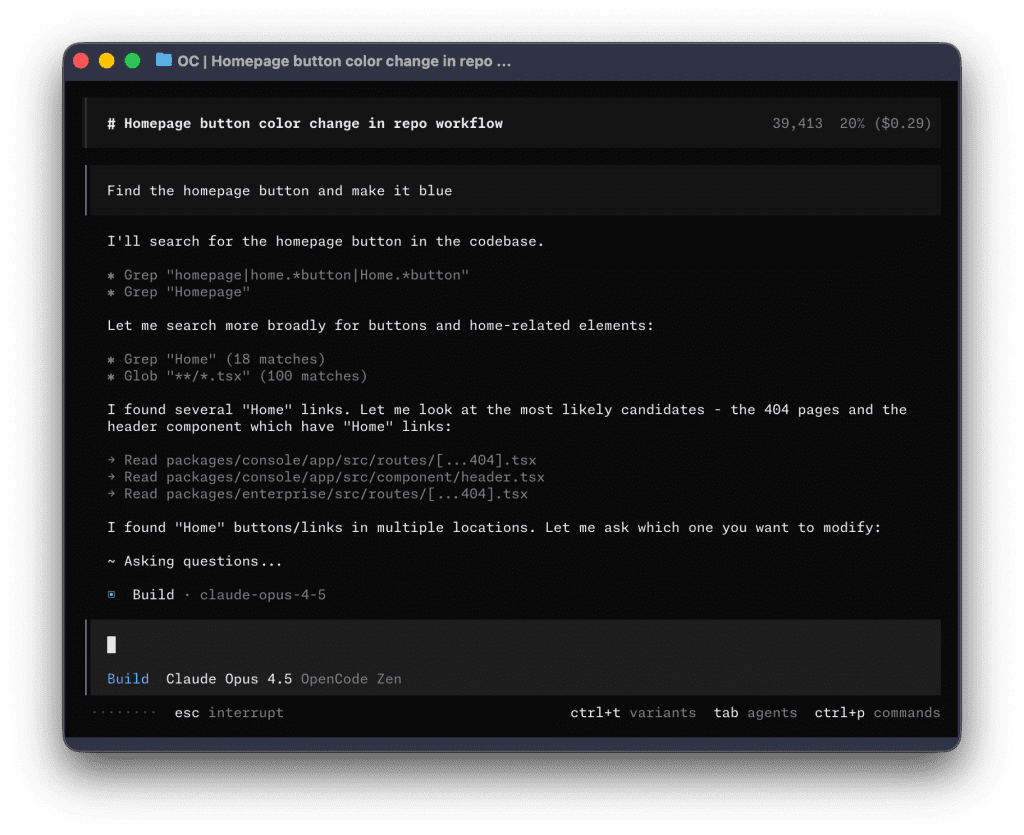
They shut off unauthorized endpoint access and forced developers back into the expensive API ecosystem. The OpenClaw ban proves the OpenCode shutdown wasn’t an isolated incident—it’s a calculated, systematic strategy.
But this isn’t just a story about a terms of service update. It’s a story about the brutal economics of AI agents, a high-profile talent acquisition, and how OpenAI perfectly capitalized on Anthropic’s mistake to win back the developer community.
The Economics of the Banhammer
To understand why this happened, you have to understand the math behind agentic loops. When you use a third-party tool like OpenClaw, you have two ways to authenticate: use an API key or use the OAuth token from your $20/month Claude Pro (or $100/mo Max) subscription.
The choice for builders was obvious.
Agentic systems burn through tokens like jet fuel. Unlike a human who sends a few paragraphs of text, an agent like OpenClaw might ingest your entire codebase just to fix a single bug. Every time it loops, it resends that context.
Let’s run the numbers on Claude Opus 4.6. Using the API directly costs $5 per million input tokens and $25 per million output tokens. A simple “hello” with a loaded context window can consume 50,000 tokens.
That’s a minimum of $0.25 purely in input costs just to start a conversation. If OpenClaw loops 50 times during a complex debugging session, you are burning dollars—not pennies—per task. For a tinkerer working on a weekend project, the API is financially unsustainable.
By leveraging the OAuth token, users were getting a massive, flat-rate discount through Anthropic’s consumer interface pricing. Anthropic realized they were heavily subsidizing the builder community’s compute costs. To protect their margins, they restricted OAuth exclusively to their own products like Claude Code and Claude.ai.
The Ultimate “Bag Fumble”: Enter OpenAI
Anthropic’s decision to protect its API revenue makes economic sense, but their execution was a masterclass in alienating your most passionate users. The timeline here tells you everything you need to know about the current AI arms race.
First, Clawdbot goes viral. Since “ClaudeBot” is actually the name of Anthropic’s official web crawler, they naturally contact creator Peter Steinberger and force a name change due to trademark concerns. The project temporarily rebrands to Moltbot (leaning into a lobster theme) before officially becoming OpenClaw.
Then, Steinberger flies to San Francisco, meets with leading AI labs, and roughly a week and a half later, on February 15, 2026, Sam Altman makes the announcement: OpenAI is acqui-hiring Steinberger. While OpenClaw itself will transition to an independent open-source foundation, OpenAI will provide ongoing support, and Steinberger will lead their “next generation of personal agents.”
Just days after Peter joins OpenAI, Anthropic officially blocks OpenClaw OAuth usage. And on that exact same day, OpenAI publicly confirmed that developers are completely free to use their ChatGPT subscriptions (via OAuth) to power OpenClaw.
This is the equivalent of Anthropic kicking their best developers out of the building, only for Sam Altman to be waiting on the sidewalk with a welcoming committee and free compute. OpenAI, fresh off the launch of GPT-5.3-Codex, recognized that winning the open-source agentic ecosystem is more valuable than the short-term compute costs of a few thousand tinkerers.
The “API Reality” Constraint
The backlash from the community wasn’t just entitlement; it was an acknowledgment of a fundamental physical and economic constraint in AI. We simply don’t have the compute efficiency yet to run fully autonomous, context-heavy agents cheaply.
We talk a lot about agentic swarms and self-improving code loops, but the reality is constrained by the speed of light and the cost of silicon. Anthropic’s API pricing is designed for enterprise B2B integrations, where a single successful API call might generate thousands of dollars in business value. It is not designed for a solitary developer running 50 failed loops to generate a Python script.
By banning OAuth, Anthropic forced the community to face the true “cost of intelligence.” It’s a sobering reminder that until inference costs drop by another order of magnitude, true agentic freedom requires either deep pockets or heavily subsidized consumer subscriptions.
The Anti-Competitive Moat
We need to call this exactly what it is: using Terms of Service as an anti-competitive moat.
By systematically banning third-party clients like OpenCode and OpenClaw, Anthropic isn’t just protecting its compute margins. They are aggressively protecting their own first-party ecosystem—specifically, Claude Code and the Claude desktop app.
Think about it. The independent developer community is currently iterating on agentic UI and UX far faster than any centralized AI lab can. OpenClaw and OpenCode were building the exact workflows developers actually wanted. By cutting off their affordable compute supply, Anthropic effectively starves out the competition, forcing users to either pay exorbitant API enterprise rates or abandon their preferred tools and use Anthropic’s proprietary, vertically integrated software.
It’s a classic walled-garden strategy. “You can use our intelligence, but only through the interfaces we control.” And it just handed OpenAI the greatest gift possible.
What This Means For You
If you were relying on Anthropic’s subscription to power your local agents, you need a new stack. Here’s how the community is adapting to the new reality:
- The OpenAI Pivot: The most immediate solution is switching your OpenClaw backend to ChatGPT. OpenAI officially permits this, enabling “subscription auth” through OAuth. This means if you have a ChatGPT Plus, Pro, or Team subscription, you can leverage models like GPT-5.2, GPT-4o, and even the new gpt-5.3-codex for complex tasks without incurring any API costs.
- Delegated Tooling: Reserve expensive API calls for models like Claude Sonnet 4.6 only when absolutely necessary (e.g., highly complex architectural planning). Offload the repetitive code execution and generation to specialized tools like GitHub Copilot CLI or local models.
- Small Model Swarms: Use fast, cheap models (like GPT-5 mini or local open-weights) for notification classifiers and rerankers, only escalating to frontier models when the context demands it.
The Bottom Line
Anthropic made a financially sound, but culturally disastrous decision. In an era where AI labs are fighting tooth and nail for developer mindshare, telling your most active tinkerers that they must pay enterprise API rates to play with new paradigms is a losing strategy. By acquiring OpenClaw’s creator and explicitly opening their subscription gates, OpenAI didn’t just win a news cycle—they secured the loyalty of the developers building the next generation of AI tools.
FAQ
Why did Anthropic ban OpenClaw?
Anthropic banned the use of all consumer subscription OAuth tokens ($20/mo Pro and $100/mo Max) in third-party agentic tools because these tools burn massive amounts of context, costing the company significantly more than the subscription fees. They want developers using the pay-per-token API instead.
Can I still use Anthropic’s Agent SDK?
Yes, but with caveats. Tariq from Anthropic clarified that while local experimentation is encouraged, anyone building a serious tool or business on top of the Agent SDK must use a standard API key, not consumer OAuth.
Does OpenAI allow OpenClaw?
Yes. Following the acquisition of Peter Steinberger, OpenAI publicly stated that users are allowed to use their ChatGPT Plus/Pro/Team subscriptions via OAuth to power OpenClaw. This specifically includes support for configuring OpenClaw to use the gpt-5.3-codex model, providing a massive advantage for agentic coding workflows.