

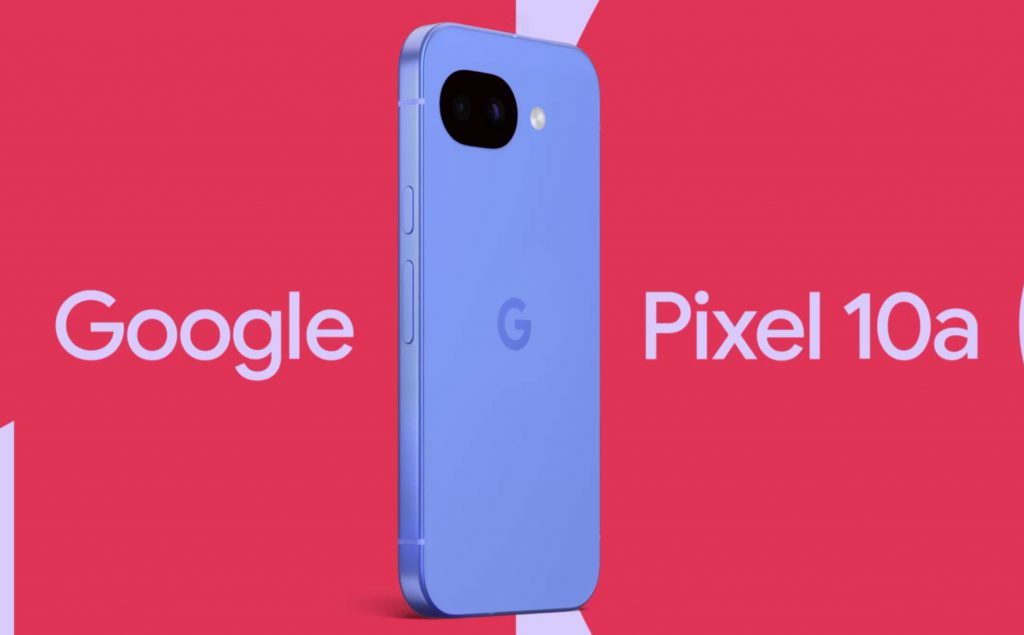

Google just launched the Pixel 10a on February 18, 2026, and the internet immediately split into two camps. One side is calling it “basically a Pixel 9.1a” – a lazy, recycled spec sheet with a new coat of paint. The other side is quietly pre-ordering it because they understand something the spec-sheet crowd doesn’t: this phone’s real value isn’t in the silicon. It’s in what that silicon does.
I’ve been watching Google’s mid-range strategy for years, and the Pixel 10a is the most interesting case study yet in the gap between hardware specs and actual user value. The critics aren’t wrong. But they’re also missing the point entirely.
The Spec Sheet That’s Driving People Crazy
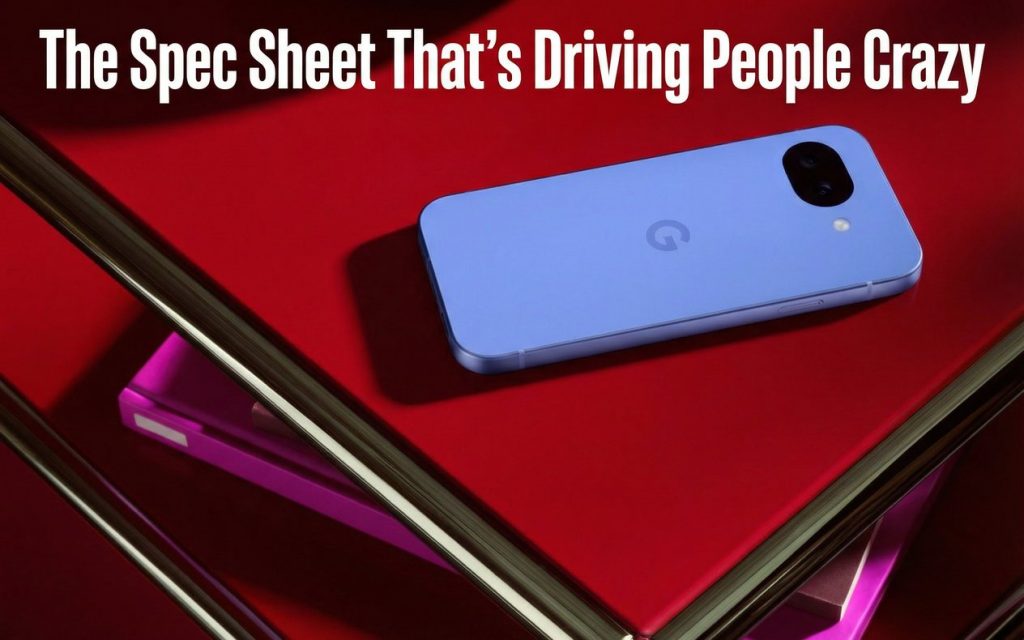
Let’s get the elephant out of the room. The Pixel 10a runs on the same Tensor G4 chip as the Pixel 9a. Same 8GB of RAM. Same 48MP main camera paired with a 13MP ultrawide. Same 5,100mAh battery. Same $499 starting price.
On paper, this looks like Google phoned it in. And honestly? For Pixel 9a owners, it kind of did.
But here’s what the spec comparison misses: the Tensor G4 isn’t a chip that’s running out of headroom. It’s a 4nm processor built specifically to run on-device AI workloads – and Google has spent the past year shipping new AI features that the chip can now fully exploit. The hardware didn’t change. The software ecosystem around it got dramatically better.
Think of it like this: you bought a high-end graphics card two years ago. The card didn’t change. But the games running on it got better. The Pixel 10a is that same card, now with the games it was always designed to play.
The display did get a meaningful upgrade: 3,000 nits peak brightness (up from 2,700 nits on the 9a), Gorilla Glass 7i replacing the older Gorilla Glass 3, and the same 6.3-inch 120Hz OLED panel that made the 9a’s screen one of the best in its class. That’s a real, tangible improvement – especially for outdoor visibility.
The AI Story Nobody’s Telling Correctly
Here’s what actually matters about the Pixel 10a, and what most reviews are burying in paragraph seven: this is the first A-series Pixel to ship with Camera Coach.
Camera Coach uses Gemini to analyze your scene in real-time and give you composition and lighting advice before you take the shot. Not after. Not in post. Before. That’s a fundamentally different relationship with your camera – more like having a photography mentor in your pocket than a post-processing engine.
Combined with Gemini Nano with Multimodality running entirely on-device (meaning your data stays on the phone, not Google’s servers), the Pixel 10a is doing something genuinely novel. The Tensor G4’s Neural Processing Unit was built for exactly this workload – running small language models locally, processing text, images, and audio simultaneously without a cloud round-trip.
The full Gemini integration also means Gemini Live is available for natural, back-and-forth conversations. Not the stilted “Hey Google, set a timer” interactions of the old Assistant era. Actual conversational AI that can help you draft emails, plan trips, or debug code while you’re on the go.
And as Google completes the transition from Google Assistant to Gemini across Android by March 2026, the Pixel 10a will be the best-positioned mid-range device to benefit from every new capability that rolls out.
This connects to a broader pattern we’ve been tracking: the AI monetization war between Google, Anthropic, and OpenAI is increasingly being fought at the device level. Google’s bet is that owning the hardware-to-AI pipeline – from the Tensor chip to Gemini to the Pixel camera – creates a moat that pure software players can’t easily replicate.
What Actually Changed (And What Didn’t)
Let me give you the honest comparison table, because the internet is full of misleading ones:
| Feature | Pixel 10a | Pixel 9a |
|---|---|---|
| Processor | Tensor G4 (4nm) | Tensor G4 (4nm) |
| RAM | 8GB LPDDR5x | 8GB LPDDR5x |
| Display | 6.3″ OLED, 120Hz, 3,000 nits | 6.3″ OLED, 120Hz, 2,700 nits |
| Glass | Gorilla Glass 7i | Gorilla Glass 3 |
| Main Camera | 48MP, OIS | 48MP, OIS |
| Ultrawide | 13MP | 13MP |
| Battery | 5,100mAh | 5,100mAh |
| Wired Charging | 45W | 23W |
| Wireless Charging | 10W | 7.5W |
| OS | Android 16 | Android 15 |
| Updates | 7 years | 7 years |
| Satellite SOS | Yes (first A-series) | No |
| Quick Share (iPhone) | Yes | No |
| Design | Flat camera module | Camera bar |
| Price | $499 / $599 | $499 / $599 |
The charging speed jump is the most underrated upgrade here. Going from 23W to 45W wired charging is nearly a 2x improvement. That’s the difference between plugging in for 20 minutes and getting a meaningful charge versus needing to plan your day around charging windows. For most people, this is a daily quality-of-life improvement that no benchmark captures.
The flat camera module is also worth noting. Google’s signature “visor” camera bar was a polarizing design choice. The Pixel 10a goes flush – a cleaner, more conventional look that will age better and make cases easier to find.
The 8GB RAM Problem (And Why It Matters More Than You Think)
I’m not going to pretend the criticism about RAM is wrong. It isn’t.
8GB of RAM was adequate in 2025. By 2026, with on-device AI models consuming significant memory headroom, it’s starting to feel tight. The Pixel 10a promises seven years of OS updates – which means you’re asking this phone to run Android 23 in 2033. That’s an ambitious promise with 8GB of RAM.
Android Authority’s analysis makes a fair point: as Gemini Nano models get larger and more capable, they’ll compete with app memory for the same 8GB pool. You might start noticing app reloads and background process kills more frequently as Google ships more aggressive on-device AI features over the next few years.
This is the real constraint the Pixel 10a faces – not the Tensor G4’s processing power, but the memory bandwidth available to feed it. It’s a physics problem: you can’t run a 2GB language model, keep six apps in memory, and stream music simultaneously without something giving way.
Google’s bet is that Gemini Nano will get more efficient faster than apps get more memory-hungry. That’s a reasonable bet. But it’s still a bet.
How It Stacks Up Against the Real Competition
The Pixel 10a isn’t competing with the Pixel 9a. It’s competing with the iPhone 16e ($599 base) and the Samsung Galaxy A56 ($499).
Against the iPhone 16e, the Pixel 10a wins on price ($499 vs $599), display refresh rate (120Hz vs 60Hz), and camera versatility (dual rear vs single). The iPhone 16e wins on raw chip performance (A18 is significantly faster than Tensor G4 in CPU tasks) and ecosystem integration for Apple users. If you’re already in the Apple ecosystem, the 16e makes sense. If you’re not, the Pixel 10a is the better value.
Against the Galaxy A56, it’s closer. Samsung offers a larger 6.7-inch display, a triple camera system (with a dedicated macro lens), and the same 45W charging.
But the Pixel 10a counters with cleaner software, guaranteed Android 16 out of the box, seven years of updates (vs Samsung’s six), and Gemini integration that Samsung’s One UI can’t match. The A56 also lacks satellite emergency calling – a feature that sounds gimmicky until you need it.
The real competition for the Pixel 10a isn’t any single device. It’s the question of whether Google’s AI-first software strategy justifies paying $499 for hardware that, on paper, looks like last year’s phone.
Who Should Actually Buy This
The Pixel 10a makes clear sense for three groups of people:
First-time Pixel buyers or Android switchers: You get Google’s best camera software, seven years of updates, Gemini Live, and a clean Android 16 experience at a price that’s $100 less than the iPhone 16e. This is a strong buy.
Pixel 8a or older owners: The jump from Tensor G2/G3 to G4 is real. You’ll notice faster AI processing, better camera performance, and a significantly improved display. The 45W charging alone is worth the upgrade from the 8a’s 18W.
Anyone who cares about long-term software support: Seven years of OS updates is genuinely rare at this price point. If you want to buy a phone and not think about it until 2033, the Pixel 10a is one of the few mid-range options that makes that promise credible.
Pixel 9a owners: Skip it. The charging speed improvement is nice, but not $499 nice. Wait for the Pixel 11a.
This mirrors the pattern we saw with MiniMax M2.5’s positioning in the AI model market – sometimes the most compelling value proposition isn’t the bleeding edge, it’s the reliable, well-supported option that does what you need without surprises.
The Bottom Line
The Pixel 10a is not a revolutionary phone. It’s not supposed to be. It’s a refinement of a formula that already worked, with meaningful improvements in the areas that matter most for daily use: charging speed, display brightness, glass durability, and AI feature access.
The critics calling it “lazy” are right about the spec sheet. But they’re wrong about the value. Google’s real product isn’t the Tensor G4 chip – it’s the seven-year software commitment, the Gemini integration, and the camera intelligence that no $499 Android phone can match.
The 8GB RAM concern is legitimate and worth watching. If you’re buying this phone expecting it to feel fast in 2030, you might be disappointed. But if you’re buying it to be the best $499 Android phone available today, with the best AI camera software and the longest update commitment in its class, the Pixel 10a delivers.
Pre-orders are open now. General availability starts March 5, 2026. Available in Obsidian, Fog, Lavender, and Berry.
The question isn’t whether the Pixel 10a is a great phone. It is. The question is whether you’re the right buyer for it.
FAQ
Is the Pixel 10a worth buying over the Pixel 9a?
Only if you’re coming from a Pixel 8a or older. The Pixel 9a and 10a share the same processor, RAM, and camera hardware. The meaningful upgrades – 45W charging, Gorilla Glass 7i, satellite SOS, and the flat camera design – don’t justify the cost of upgrading from a 9a that’s working fine.
Does the Pixel 10a have 5G?
Yes, the Pixel 10a supports 5G connectivity along with Wi-Fi 6E, Bluetooth 6.0, NFC, and satellite emergency calling (Satellite SOS) – the first A-series Pixel to include the satellite feature.
How does the Pixel 10a camera compare to flagship Pixels?
The Pixel 10a uses the same 48MP main sensor as the Pixel 9a, which is a step down from the Pixel 10’s 50MP main with a dedicated telephoto lens. You won’t get optical zoom on the 10a. But Google’s computational photography software – including Camera Coach, Auto Best Take, and Magic Editor – runs on the 10a, so the gap in everyday photos is smaller than the spec sheet suggests.
Will the Pixel 10a get Android 17?
Yes. Google has committed to seven years of OS and security updates for the Pixel 10a, meaning it will receive updates through approximately 2033, covering Android 17, 18, and beyond.
What colors does the Pixel 10a come in?
The Pixel 10a is available in four colors: Obsidian (black), Fog (light gray), Lavender, and Berry. The Berry and Lavender options are new additions not available on the Pixel 9a.