

An army marches on its stomach, but it runs on paperwork. And for the last 50 years, that paperwork has been the single greatest threat to operational tempo.
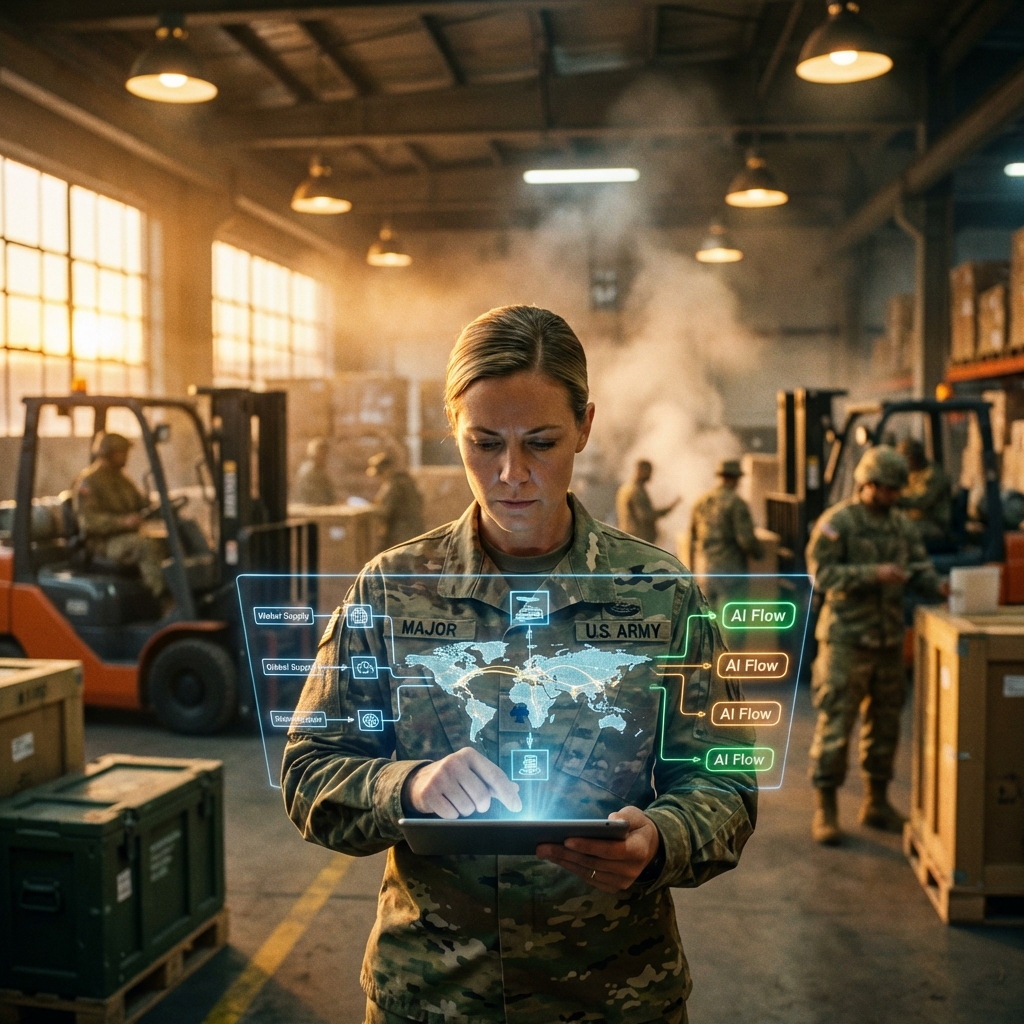
Enter “AI Flow.” As of January 2026, what began as a pilot program at the Communications-Electronics Command (CECOM) has scaled into a force-wide reality. Available to every Common Access Card (CAC) holder, AI Flow isn’t just a chatbot; it’s an agentic workflow engine built on the hardened backbone of Microsoft Azure Government.
While the USMC Launches “GenAI.mil” to standardize intelligence, the Army is playing a different game. They are using AI Flow to weaponize bureaucracy, turning administrative friction into “Cognitive Mass.”
In this deep dive, we unpack the Azure IL6 architecture, the Palantir Vantage integration, and the revolutionary “Doctrinal Adjudication” wargaming models being taught at the Command and General Staff College.
The Architecture: Azure Government & The IL6 Cloud
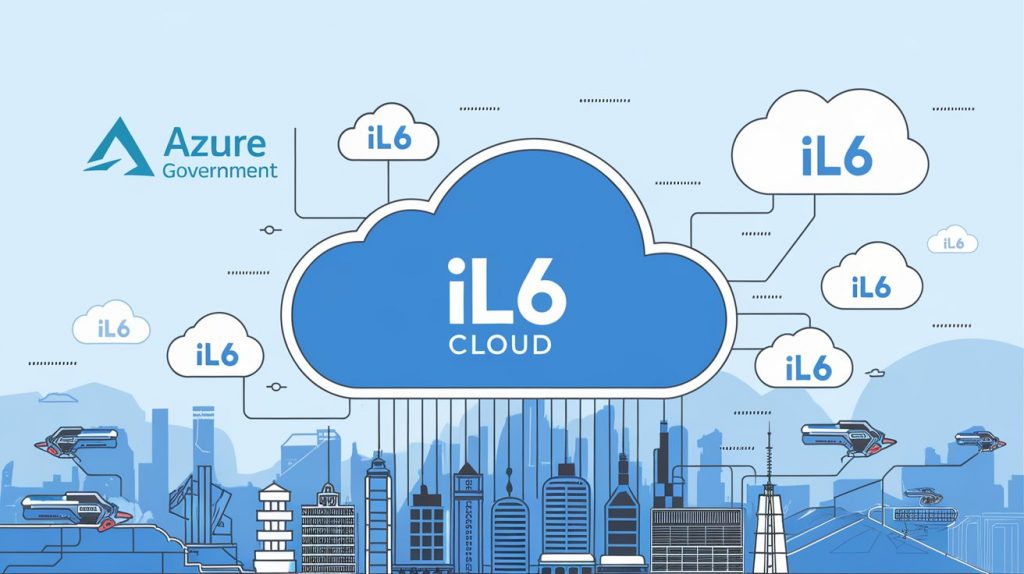
AI Flow isn’t running on the public internet. It lives inside Microsoft Azure Government, a physically isolated cloud environment designed for the Department of Defense.
The Security Stack
The system acts as a secure “wrapper” around commercial models like GPT-4o.
Impact Level 6 (IL6): The architecture is authorized for data up to the Secret classification. This is a critical distinction. While many pilots run at IL5 (CUI), AI Flow’s integration into the classified cloud allows it to touch mission-critical data.
The “Air Gap” Logic: When a soldier prompts AI Flow, the query is sanitized, sent to the Azure OpenAI Service (which resides in a government-only pod), processed, and returned. OpenAI does not see the data, and the model does not* learn from the query.
This setup allows the Army to use “best-in-class” commercial AI without handing the keys to Silicon Valley.
Killing “Cognitive Drag”: The ROI of Automation
The Army calls it “Cognitive Drag”—the thousands of hours officers spend on non-combat tasks. AI Flow targets this friction with laser precision.
The J&A Breakthrough
One of the most valuable use cases from the CECOM pilot is the automation of Justification and Approval (J&A) documents. These are complex legal filings required for every sole-source contract.
- Manual Process: 2-3 weeks of drafting, reviewing, and formatting citations.
- AI Flow Process: The Contracting Officer inputs the requirements. The agent drafts a compliant, citation-backed J&A to 80% completion in minutes.
- Impact: CECOM estimates this single workflow saves thousands of man-hours annually, freeing up contracting officers to negotiate better deals rather than formatting Word docs.
RF Reprogramming
In a frantic combat scenario, reprogramming encryption keys on tactical radios is a life-or-death task. It involves parsing dense technical manuals to find the specific key-fill sequence for a specific radio variant.
AI Flow acts as a “Subject Matter Expert” in the pocket. A soldier can ask, “How do I zeroize a PRC-152A under fire?” and get a step-by-step checklist instantly, bypassing the 500-page PDF manual.
The “Brain of the Army”: Palantir Vantage Integration
AI Flow doesn’t work in a vacuum. It sits on top of Army Vantage, the massive data platform built by Palantir.
Vantage integrates 30,000 datasets from 180 distinct Army systems—logistics, personnel, intelligence, and finance.
The Structure: Vantage provides the “Truth.” It knows exactly how many 155mm shells are in Poland and how many mechanics are certified to fix an Abrams tank.
The Generative Layer: AI Flow provides the “Interface.” Instead of writing SQL queries, a commander can ask, “Show me all units in III Corps with readiness below 80% due to spare parts shortages.”
The AI translates the natural language into a database query, retrieves the structured data from Vantage, and summarizes the result. This fusion of Symbolic AI (databases/rules) and Generative AI (LLMs) is the “Holy Grail” of enterprise computing.
The CGSC Revolution: Doctrinal Adjudication
The most strategic shift is happening at the Command and General Staff College (CGSC). Starting in the 2026-2027 academic year, AI-enabled wargaming will be the default method of instruction.
Solving the “BOGSAT” Problem
Traditional wargames rely on “Bunch of Guys Sitting Around a Table” (BOGSAT) to adjudicate outcomes. It’s slow, biased, and inconsistent.
CGSC is deploying “Doctrinal Adjudication” models. These are AI agents trained specifically on US Army doctrine (FM 3-0, ADP 3-90).
Probabilistic Outcomes: The AI runs the battle 10,000 times in seconds, giving a probability curve: “94% chance of seizing Objective Alpha, but 60% chance of losing 30% of the armor.”*
Doctrinal Guardrails: If a student orders a maneuver that violates physics or logistics (e.g., ordering a tank platoon to drive 500 miles without fuel), the AI acts as a referee, citing the specific Field Manual that prohibits the action.
This trains officers to think in probabilities, not certainties—a crucial skill for the chaotic battlefields of 2030.
Strategic Implications: Cognitive Supremacy
We are moving from an era of “Kinetic Supremacy” (who has the biggest bomb) to “Cognitive Supremacy” (who thinks the fastest).
In a conflict with a near-peer adversary (like the China’s Swarm Soldier scenario), the decision loop is compressed to seconds.
- The Human Limit: A human staff can process ~50 intelligence reports an hour.
- The AI Limit: AI Flow can process 50,000.
By automating the “OODA Loop” (Observe, Orient, Decide, Act), the US Army aims to force the enemy into a reactive state. If we can draft the contract, ship the ammo, and plan the counter-attack before the enemy has even finished their damage assessment, we win.
What This Means For You
For Government Contractors:
The era of “submit and wait” is ending. Your proposals will be scanned by an AI first. Optimization for Machine Readability is the new SEO. If your proposal is a badly formatted PDF that AI Flow can’t parse, you will lose to a competitor whose data is structured.
For Soldiers:
This is the end of the “Orderly Room” culture. The metric of a good officer is no longer “how well can you format a memo.” It is “how well can you prompt the agent.” Prompt Engineering is now a combat skill.
For Enterprise Leaders:
The Army’s integration of “Symbolic Data” (Vantage) with “Generative AI” (OpenAI) is the blueprint for the corporate world. If you want to know how to deploy GenAI effectively, stop looking at Silicon Valley start-ups and start looking at the Pentagon.
The Bottom Line
AI Flow is the unsexy, boring, back-office revolution that actually matters. Autonomous tanks get the headlines, but an autonomous bureaucracy that moves at the speed of silicon is what wins the war.
FAQ
Is AI Flow the same as ChatGPT?
No. It is an “agentic” system built on Azure Government IL6, meaning it is physically isolated from the public internet and authorized for classified workloads. It uses the same model architecture (GPT-4o) but in a hardened shell.
Who can use it?
It is rolling out to all Common Access Card (CAC) holders—soldiers, civilians, and contractors.
Will it replace officers?
No. It replaces the “Cognitive Drag”—the administrative tasks that keep officers from leading. The Army’s goal is “Human-Machine Teaming,” where the AI handles the paperwork and the human handles the leadership.