
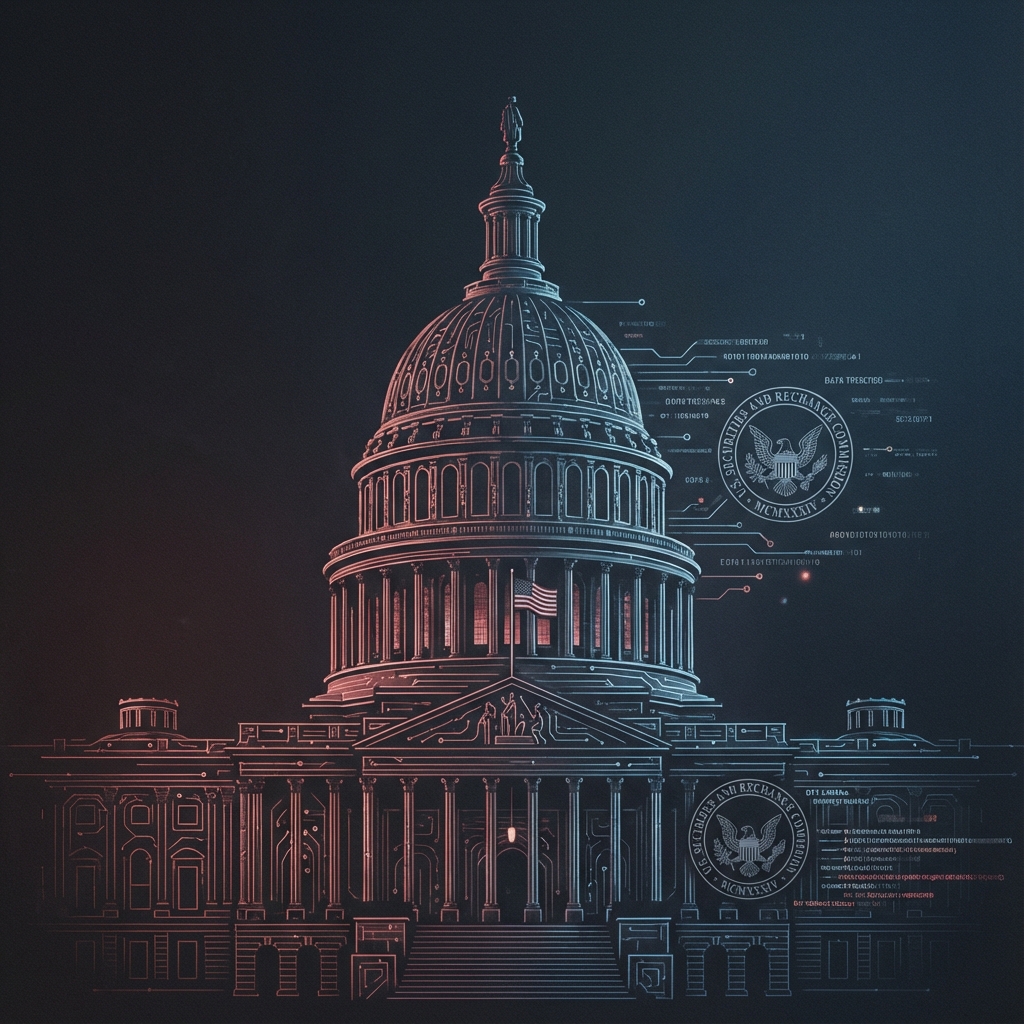

Trump’s December 2025 AI Executive Order creates a federal framework to preempt state laws, deploys a DOJ litigation task force, and threatens federal funding cuts. Full analysis of what this means for AI companies and consumers.
The Most Aggressive AI Policy Move in US History
On December 11, 2025, President Donald Trump signed Executive Order 14XXX: “Ensuring a National Policy Framework for Artificial Intelligence”—and the AI industry is still processing the implications.
The core message: The federal government is declaring war on state-level AI regulation. Through a combination of litigation threats, funding leverage, and preemption standards, the administration aims to establish a “minimally burdensome national standard” that overrides what it calls a “patchwork of 50 different state regulatory regimes.”
This isn’t subtle. It’s the most aggressive federal intervention in AI policy since the technology emerged, and it fundamentally shifts the regulatory landscape for every AI company operating in the United States.
What the Executive Order Actually Does
Let’s break down the five major mechanisms:
1. The DOJ AI Litigation Task Force
Within 30 days of the order, the Department of Justice must establish an “AI Litigation Task Force” with a singular mission: sue states.
Specifically, the task force will challenge state AI laws that are:
- Deemed unconstitutional (particularly First Amendment violations)
- Preempted by federal regulations
- “Otherwise unlawful” under the administration’s interpretation
This is unprecedented. The federal government has previously pressured states on various issues, but creating a dedicated legal unit specifically to challenge AI regulations signals the seriousness of this effort.
What This Means:
- California’s SB-1047 (AI safety requirements) is almost certainly a target
- Colorado’s AI transparency laws face legal challenge
- Any state considering new AI legislation must factor in federal litigation risk
2. Federal Funding as Leverage
The Commerce Department is directed to issue a policy notice making states with “onerous” AI laws ineligible for certain federal funding. The order specifically mentions:
- BEAD Program funds: The Broadband Equity Access and Deployment Program has billions allocated for infrastructure. States that pass conflicting AI laws may lose access.
- Discretionary grants: Federal agencies are encouraged to condition grants on states either not enacting AI laws or agreeing not to enforce existing ones.
The Financial Stakes:
| Program | Total Funding | At Risk |
|---|---|---|
| BEAD Program | $42.45 billion | Non-deployment funds |
| Various discretionary grants | Billions across agencies | Undefined but substantial |
For states like California, which receives significant federal infrastructure funding, this creates a genuine dilemma: regulatory sovereignty versus federal dollars.
3. FCC/FTC Preemption Standards
The order directs two powerful regulatory agencies to develop federal AI standards:
Federal Communications Commission (FCC):
- Consider adopting federal reporting and disclosure standards for AI models
- These standards would explicitly preempt conflicting state laws
Federal Trade Commission (FTC):
- Issue a policy statement clarifying how unfair/deceptive practices rules apply to AI
- Address the extent to which these interpretations preempt state laws mandating “alterations to the truthful outputs of AI models”
The “truthful outputs” language is telling. It appears designed to protect against state laws that might require AI models to add warnings, disclosures, or modifications to their outputs—even if the output is factually accurate.
4. “Truthful Outputs” Protection
The order specifically targets state laws that might “require AI models to alter their truthful outputs” or compel disclosures that could violate constitutional provisions like the First Amendment.
What This Could Mean:
- Laws requiring AI-generated content labels might be challenged
- Algorithmic bias disclosure requirements could be deemed unconstitutional
- Mandatory AI safety warnings might be considered “alterations”
This is perhaps the most controversial provision. Critics argue it could protect AI-generated misinformation under the guise of protecting “truthful outputs.”
5. Legislative Fast-Track
The order calls for the Special Advisor for AI and Crypto and the Assistant to the President for Science and Technology to prepare legislative recommendations for a uniform federal AI policy framework that would preempt conflicting state laws.
However, certain areas are noted where preemption may not be proposed:
- Child safety
- AI compute and data center infrastructure (with exceptions)
- State government procurement and use of AI
This suggests the administration understands that certain state-level protections are politically untouchable.
The Historical Context: Why Now?
This executive order didn’t emerge from a vacuum. Several factors converged:
The California Problem
California has been aggressive on AI regulation. SB-1047, passed in 2024, imposed significant requirements on AI developers including:
- Safety testing before deployment
- Kill switch requirements for frontier models
- Liability for catastrophic outcomes
For AI companies concentrated in the Bay Area, compliance costs were substantial. Industry lobbying against state-level regulation intensified throughout 2025.
The Colorado Cascade
Colorado followed with its own AI transparency laws, requiring:
- Disclosure of AI-generated content
- Algorithmic accountability for high-risk decisions
- Consumer notification requirements
With two major states implementing regulations, the fear of a “patchwork” became real.
Industry Pressure
AI companies argued—effectively—that:
- State-by-state compliance is operationally impossible
- Regulatory fragmentation stifles innovation
- Only federal coordination can provide clarity
The Trump administration, with its deregulatory agenda, was receptive.
Winners and Losers
Who Benefits?
AI Companies (Clearly):
- One set of rules instead of 50
- Lighter-touch federal regulation vs. stricter state laws
- Legal shield against state challenges via federal preemption
Startups:
- Reduced compliance complexity
- Can launch nationally without state-by-state legal review
- Lower regulatory overhead
Federal Regulators:
- Expanded jurisdiction
- Clear authority over AI policy
Who Loses?
State Governments:
- Diminished regulatory sovereignty
- Federal funding as hostage
- Litigation costs to defend existing laws
Consumer Advocates:
- Weaker protections in many states
- Less transparency requirements
- Harder to pass new regulations
AI Safety Researchers:
- Reduced testing requirements
- Fewer mandatory safety standards
- Industry self-regulation likely
The Legal Challenges Ahead
This order will face significant legal opposition:
Constitutional Questions
- 10th Amendment: Does the federal government have authority to preempt state AI regulation in areas not explicitly federal?
- Spending Clause: Can federal funding be conditioned on states abandoning AI regulation?
- First Amendment: Is protecting “truthful outputs” a legitimate First Amendment concern?
State Responses
California Attorney General Rob Bonta has already signaled potential legal action. Expect:
- Coalition lawsuits from multiple states
- Challenges to both the litigation task force and funding conditions
- Extended court battles over preemption authority
Timeline
Constitutional challenges typically take years. In the meantime, the order creates immediate uncertainty for:
- States considering new AI laws
- Companies planning compliance strategies
- Investors evaluating regulatory risk
What This Means for AI Companies
Short-Term (0-6 months)
- Hold on state compliance: Don’t invest heavily in California/Colorado-specific compliance
- Monitor litigation: Track DOJ task force actions
- Lobby strategically: Federal standards are now the battleground
Medium-Term (6-24 months)
- Prepare for federal standards: FCC/FTC rules will emerge
- Adapt lobbying: Influence federal rulemaking
- Watch courts: Legal challenges will determine enforceability
Long-Term (2+ years)
- Regulatory clarity: Either federal preemption holds or states prevail
- Legislative solutions: Congressional action may supersede executive order
- Election risk: A different administration could reverse course
The Global Context
The US is now explicitly diverging from European and Chinese approaches:
| Jurisdiction | AI Regulation Philosophy |
|---|---|
| US (Trump Order) | Minimal, innovation-focused, federal preemption |
| EU AI Act | Risk-based, comprehensive, strict requirements |
| China | State-controlled, innovation-funded, content-censored |
For multinational AI companies, this creates compliance complexity. Products may need different configurations for different markets—exactly the fragmentation the order claims to prevent domestically.
The Bottom Line
Trump’s AI Executive Order is a high-stakes bet on federal supremacy over state regulation. It represents:
1. A clear industry win on reducing regulatory fragmentation
2. A constitutional gamble that will face years of litigation
3. A consumer protection rollback that critics will continue to fight
4. A global divergence from stricter regulatory approaches elsewhere
For AI developers and companies, the message is clear: focus on federal engagement. State-level regulation, at least temporarily, is in retreat.
But the long game is uncertain. Executive orders can be reversed. Courts can block enforcement. Congress can legislate. The one certainty is that AI regulation in America just got a lot more complicated.
FAQ
Does this immediately invalidate state AI laws?
No. The DOJ must sue and win in court. Existing laws remain enforceable until legally challenged and overturned.
Which states are most affected?
California and Colorado, which have the most comprehensive AI laws. Other states with pending legislation will likely pause.
Can the next president reverse this?
Yes. Executive orders can be reversed by future administrations, creating regulatory uncertainty.
How does this affect AI companies headquartered abroad?
Foreign companies serving US customers would still need to comply with any federal standards that emerge, but state-specific requirements may be preempted.
What about AI safety concerns?
The order prioritizes innovation over safety requirements. Voluntary industry standards and federal guidance will likely replace mandatory state rules.